What is driving the shift toward AI-integrated wet labs?
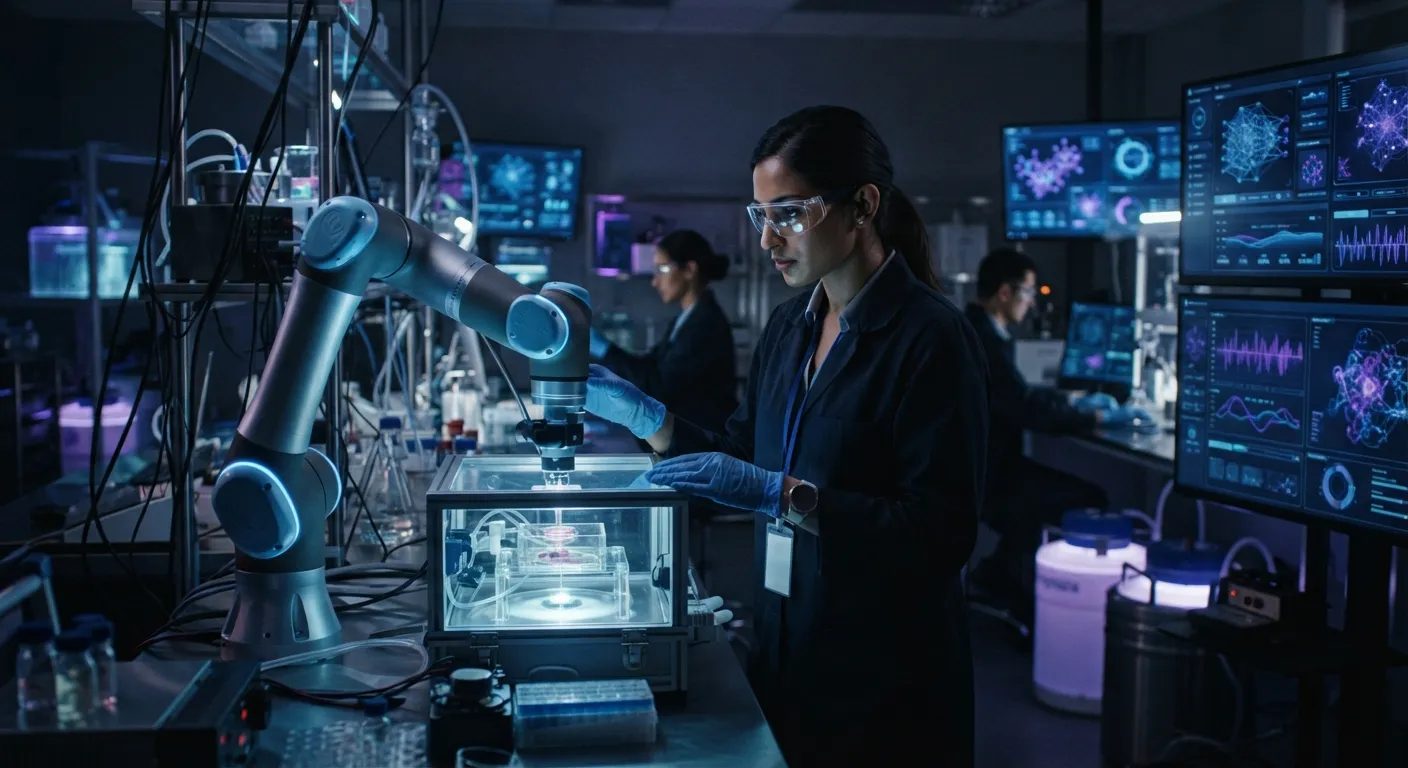
Modern advancements in AI-driven biological research are moving beyond the digital realm. Anthropic has confirmed the operation of a physical, or "wet," laboratory in the San Francisco Bay Area. This facility functions as a real-world testing ground for advanced language models. The company aims to move past theoretical simulations to physical verification of biological processes.
Anthropic’s leadership views this step as essential for achieving their ambitious goal: curing major human diseases within the next decade. While LLMs excel at processing data, they lack the physical capacity to confirm biochemical reactions. By integrating wet lab capabilities, the company can now test synthetic theories against actual organic outcomes. This physical feedback loop is widely considered the missing link for generative AI in healthcare applications.
How does the lab fit into the broader business strategy?
Anthropic’s recent acquisition of Coefficient Bio signaled a pivot toward specialized scientific capabilities. Despite the potential for conflict, the organization maintains that its internal lab focus remains on fundamental biology. This distinction is crucial to avoid competing directly with their own pharmaceutical industry clients.
Instead of encroaching on proprietary drug pipelines, Anthropic intends to serve the industry through its new Life Sciences Verification Program. This initiative provides researchers with secure access to advanced models, enabling scientific breakthroughs without bypassing established drug discovery protocols. By positioning itself as an infrastructure provider, the company aims to support global research rather than disrupt existing market hierarchies.
Is there tension between safety and scientific progress?
Balancing technical advancement with safety remains a primary concern. The industry faces significant pressure following internal warnings about the potential risks posed by advanced intelligence systems. Anthropic’s own alignment team has acknowledged the existence of existential threats, with leadership advocating for industry-wide self-regulation to mitigate risks like bioterrorism.
This paradox—building powerful tools while warning of their potential to cause harm—has sparked debate within the tech sector. Critics argue that operating a physical lab while simultaneously calling for strict oversight is contradictory. However, the organization maintains that physical testing is actually a tool for safer AI development, allowing researchers to observe real-world interactions rather than just generating theoretical code.
What does the future of AI-assisted laboratory work look like?
As the industry moves toward automated research, the standard for artificial intelligence in life sciences continues to rise. Anthropic is already publishing research on protein design and bimolecular modeling. These efforts reflect a transition where models don’t just predict outcomes—they suggest novel solutions that are then physically validated.
This workflow represents a fundamental shift in how labs operate. By automating the design phase, scientists can accelerate the cycle of experimentation. As models become more reliable at predicting molecular behavior, the reliance on human-intensive trial-and-error will likely decrease. Future labs may look increasingly like server rooms, where physical tasks are relegated to robotics governed by sophisticated, oversight-heavy AI architectures.