
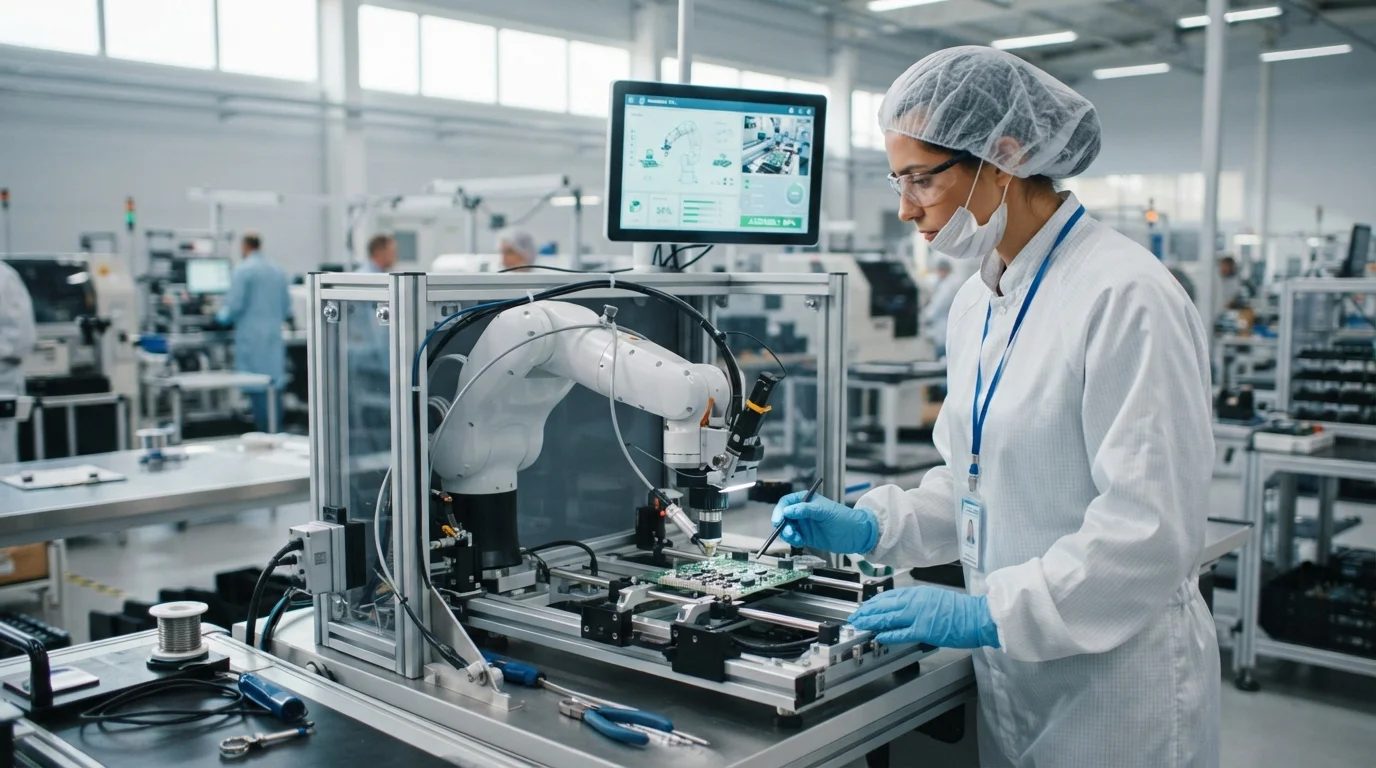
Chinese robot technology 2026 revenue is projected to see significant expansion as the nation accelerates the integration of advanced automation across its manufacturing sector. Robotics technology refers to the design, construction, and operation of autonomous machines capable of performing complex physical tasks with high precision. By 2026, the Chinese robotics market is expected to serve as a cornerstone of the global industrial landscape, driven by government incentives and rapid advancements in artificial intelligence.
What factors are driving Chinese robot technology revenue growth?
Investment in specialized hardware and domestic policy support are the primary catalysts for current market acceleration in China. According to Reuters, state-led initiatives emphasize the transition toward high-end manufacturing, necessitating the deployment of sophisticated automation systems. These systems allow enterprises to scale production while managing rising labor costs effectively.
Strategic focus areas include human-robot collaboration and autonomous logistics. As domestic manufacturers reduce reliance on imported components, the local supply chain for advanced sensors and actuators is maturing. This localization reduces overhead and increases the overall profitability of the domestic robotics sector. By streamlining production lines through proprietary industrial automation solutions, Chinese firms are positioning themselves to capture a larger share of the international market by 2026.
How does the integration of AI impact robotic performance?
Artificial intelligence enables robots to move beyond simple, repetitive motions, allowing for real-time decision-making and environmental adaptation. Machine learning models, often powered by high-performance AI hardware, allow robots to process visual data and adjust movements dynamically. This intelligence reduces downtime and improves efficiency in high-precision assembly environments.
| Feature | Traditional Automation | AI-Driven Robotics |
| :— | :— | :— |
| Adaptability | Low (Fixed tasks) | High (Dynamic tasks) |
| Data Usage | Minimal | High (Continuous learning) |
| Maintenance | Scheduled | Predictive |
By 2026, the deployment of generative AI in robotics will likely allow systems to understand unstructured natural language commands and solve complex logistical challenges. This shift minimizes the need for specialized human programming. Consequently, businesses can deploy robots in environments that were previously too unpredictable for rigid automated systems, expanding the total addressable market significantly.
Which industries are primary adopters of robotic technology?
Automotive manufacturing, electronics assembly, and healthcare are the lead sectors driving the demand for advanced robotics in China. In vehicle production, robots handle tasks ranging from chassis welding to precision painting with minimal error. Meanwhile, the electronics industry utilizes high-speed micro-assembly robots to manage tiny components at scale.
Healthcare represents an emerging frontier for robotics adoption. Surgical robots and hospital logistics units are seeing increased investment as the population ages and the demand for precision medical care rises. According to the World Health Organization, the integration of digital health tools is becoming essential for maintaining public health standards. These specialized units generate stable, long-term revenue streams compared to the cyclical nature of general industrial hardware sales.
What role does government policy play in market expansion?
Government mandates are prioritizing the development of self-sufficient technology ecosystems to secure long-term economic stability. Policies provide tax breaks, research grants, and infrastructure support for companies specializing in robotics and autonomous systems. These incentives encourage domestic companies to bridge the technological gap with international competitors through massive R&D spending.
By centralizing resources, the government ensures that critical sectors like semiconductor manufacturing and renewable energy receive the necessary automated infrastructure. This top-down approach accelerates the transition from manual labor to high-efficiency robotic production. As these companies scale, they contribute to a broader increase in the overall revenue generated by the technology sector, solidifying China’s status as a global leader in industrial robotics deployment.
How are supply chain developments affecting profit margins?
Vertical integration allows companies to control costs better by manufacturing key components like robotic arms, grippers, and controllers internally. Previously, reliance on imported parts created volatility in margins due to shifting trade conditions and currency fluctuations. By developing internal expertise, firms are insulating themselves from external supply shocks while maintaining higher quality control.
Building a robust domestic supply chain is not merely a cost-saving measure but a strategic necessity for long-term revenue growth. When domestic providers can deliver integrated software and hardware stacks, the friction in deploying new robotic cells decreases. This improved user experience encourages faster adoption rates across small and medium-sized enterprises. As the ecosystem matures, the cost of entry for new businesses continues to drop, fueling a broader market expansion through 2026 and beyond.
What are the projected trends for robotics through 2026?
Industry forecasts suggest a transition toward modular robotic platforms that offer greater flexibility for manufacturers with varying production needs. Instead of purchasing dedicated hardware for single tasks, companies are investing in reconfigurable systems. These systems enable quick updates to software and mechanical components to adapt to new product cycles without full hardware replacement.
Furthermore, the convergence of cloud computing and robotics will allow for centralized control of dispersed robotic fleets. Real-time data telemetry from thousands of units will improve predictive maintenance, reducing costly factory stoppages. This connectivity ensures that businesses can optimize their total operational output from a centralized dashboard. Looking toward 2026, the focus will remain on refining these intelligent systems to maximize uptime and reduce the total cost of ownership for end-users.
Conclusion
The trajectory of Chinese robot technology 2026 revenue highlights a shift toward high-efficiency, AI-integrated manufacturing. With state support, a maturing domestic supply chain, and advancements in autonomous systems, China is set to consolidate its position as an industrial powerhouse. Continued innovation in software and hardware integration remains the key driver for sustained economic growth in this sector.