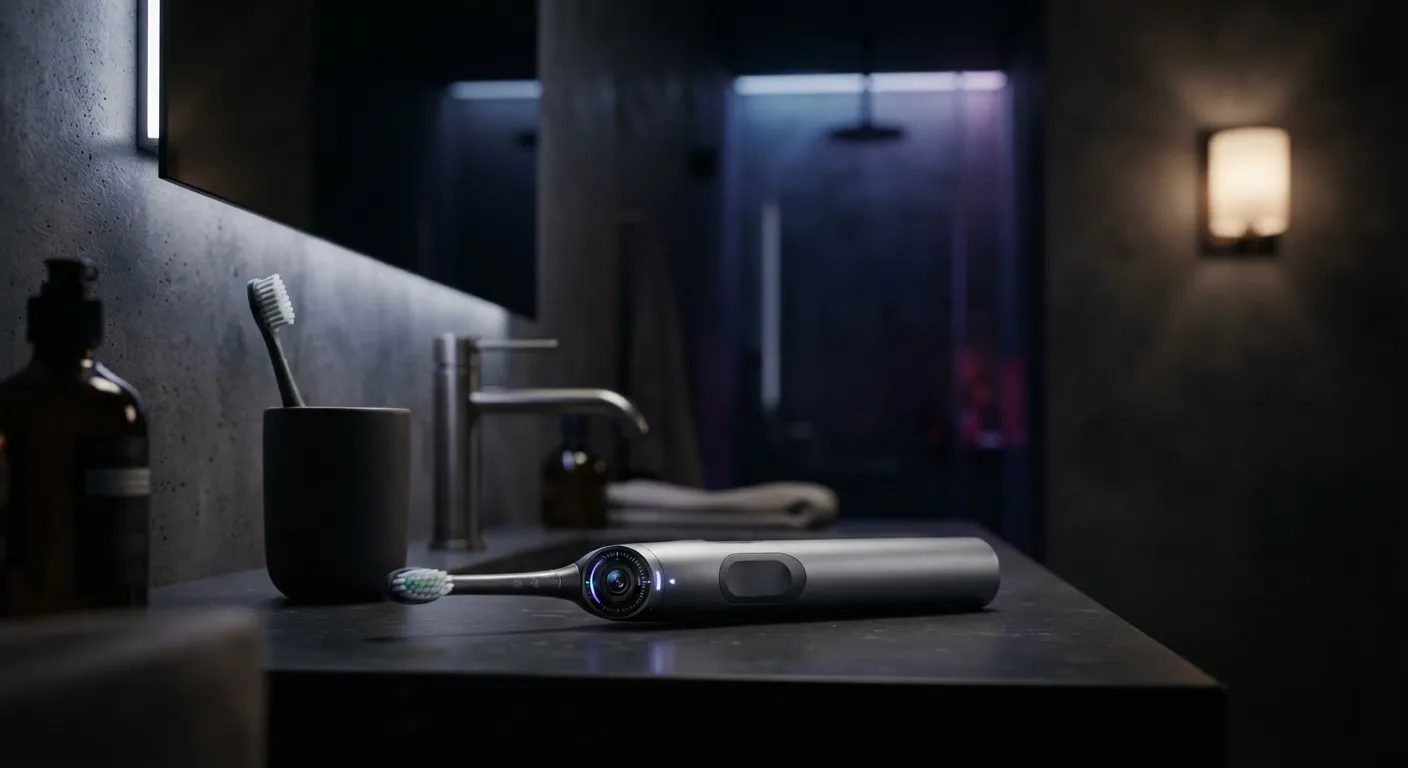
The Dyson CameraJet is a high-tech oral hygiene device that integrates computer vision and precision fluid dynamics to optimize dental cleaning. By leveraging machine learning to identify interdental gaps, this tool represents a significant shift in how we approach preventative maintenance for oral health.
How does the Dyson CameraJet target interdental gaps?
This device uses an advanced AI-driven system to identify spaces between teeth and deliver targeted fluid bursts in real time. By analyzing live imagery, the brush ensures that mouthrinse is applied precisely where it is most needed during a standard brushing routine.
At the core of this system is the Gap Optical Targeting technology. It processes 28 images per second through a high-resolution macro lens. When the software detects an interdental gap, a diaphragm pump triggers a conical jet of mouthwash. This process occurs within 100 milliseconds, allowing for an automated flossing experience that coincides with regular brushing. Unlike traditional water flossers that require a separate, manual step, this system automates the most commonly neglected part of oral care. Dyson’s development team spent years training their algorithms on hundreds of thousands of dental images, ensuring the precision required for consistent, reliable performance in various orientations.
Why is manual flossing often ineffective for the average user?
Most individuals fail to floss regularly because the process is time-consuming and mechanically awkward to perform correctly. When flossing is skipped, plaque accumulates in the hard-to-reach spaces between teeth, eventually leading to tartar buildup and increased risk of decay.
According to the World Health Organization, oral diseases affect nearly 3.7 billion people globally, highlighting a massive gap in daily care standards. Many people also struggle with recommended brushing durations, often failing to reach the two-minute mark. By combining mechanical scrubbing with automated fluid delivery, this device addresses the fundamental issue of user inconsistency. When plaque is allowed to harden in interdental spaces, it necessitates professional intervention that could otherwise be avoided with better daily hygiene habits. Integrating these steps into a single, automated session lowers the barrier for users to achieve dentist-recommended levels of cleanliness.
How does the conical jet improve plaque removal?
Traditional needle-type water jets often fail to remove sticky plaque because they pierce through the debris rather than sweeping it away. Dyson’s conical jet provides a wider, optimized spray pattern that effectively removes plaque while remaining gentle on delicate gum tissue.
Engineers at the company collaborated with the National University of Singapore to develop a specialized proxy plaque. This substance allowed for iterative testing of fluid dynamics without constant reliance on clinical trials. The resulting conical spray profile covers more surface area than high-pressure laminar flows, which can sometimes be too abrasive for sensitive enamel. By lowering the pressure while increasing coverage, the device successfully lifts plaque without causing the gum irritation often associated with older, more aggressive flossing technologies. This approach balances the need for high-performance cleaning with the requirement for long-term oral tissue protection.
Can a toothbrush camera actually improve oral health insights?
By providing a live endoscope feed through the MyDyson app, the camera allows users to view their own dental health and observe the efficacy of their cleaning process. This visual feedback loop helps users understand exactly where they might be missing spots.
Privacy remains a key focus for this implementation. The device does not store or upload images to the cloud; the live feed is strictly for the user’s real-time review. This feature effectively democratizes dental imaging, allowing individuals to see what a professional sees during a routine checkup. The connectivity uses standard Bluetooth and Wi-Fi protocols to sync data to the mobile application. Through this digital interface, users can track their cleaning coverage and access guided tutorials. This adds an educational component to the physical act of brushing, turning a mundane daily task into a data-driven personal health project.
What technology prevents the device from losing performance?
To maintain consistent fluid delivery, the hardware utilizes an anti-gravity tank and a pressure chamber system that functions regardless of the brush’s angle. This ensures that the user receives an uninterrupted jet of mouthrinse even when reaching the back molars.
Traditional systems often rely on gravity to draw fluid, which can lead to performance drops when the device is tilted horizontally. The Dyson design uses a diaphragm pump to eliminate air pockets, ensuring the device never fires blanks. Additionally, the variable sonic oscillation prevents the brush head from stalling against the tooth surface, which is a common limitation of fixed-oscillation sonic brushes. The brush head itself utilizes RFID-tagged components that signal the system to monitor the condition of the bristles. When the bristles wear down, the device notifies the user to ensure that cleaning performance remains at peak levels.
Is there a specific benefit to the dual-bristle head design?
| Bristle Type | Primary Function |
| :— | :— |
| Inner Bristles | Surface stain removal and scrubbing |
| Outer Bristles | Gentle cleaning along the gumline |
The topography of the brush head is specifically contoured to mimic the shape of human teeth, which are not flat surfaces. The softer outer bristles are designed to protect the gumline, while the firmer inner bristles focus on removing stubborn plaque. This dual-action approach, paired with sonic vibrations, lifts surface stains that would otherwise linger on the tooth enamel. Because each brush head is tracked via RFID, the system accurately records the number of cleans performed, alerting the user to replace the head before its effectiveness wanes. This ensures that the mechanical aspect of the brushing process remains as consistent as the electronic and fluid-delivery components.
Summary of Innovation
The integration of AI and fluid dynamics into a consumer device marks a significant milestone in oral health. By automating the most difficult parts of a dental routine, this technology promises to bridge the gap between clinical recommendations and daily habits.