What Is Fermi Explorer and Why Does It Matter?
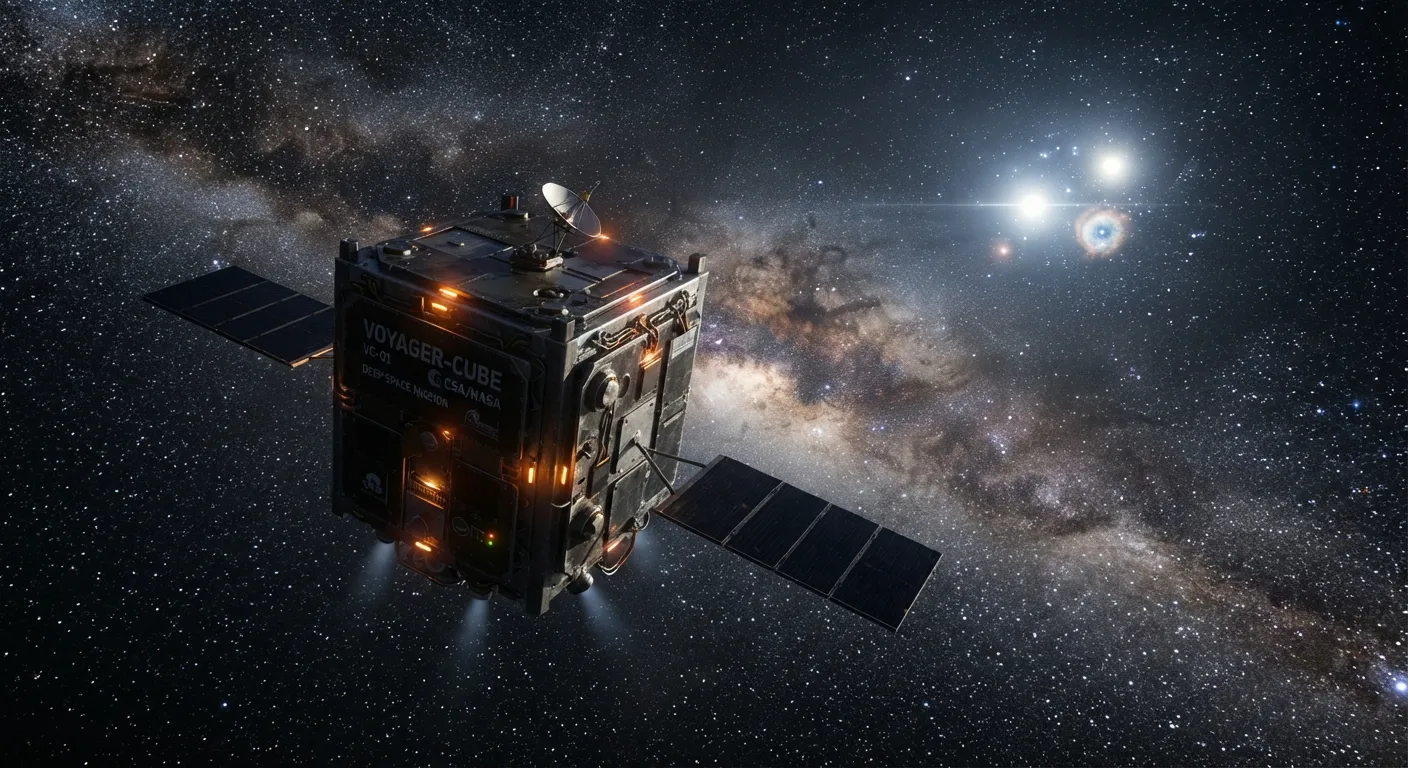
The dream of interstellar travel usually conjures images of massive starships and exotic propulsion systems. But what if the first human-built object to intentionally target another star system were a tiny 1-kilogram probe? That’s the bold premise behind Fermi Explorer, a new nonprofit initiative aiming to send a small spacecraft on an 80,000-year journey to Alpha Centauri. The mission’s focus keyword, interstellar exploration, takes on a new meaning here—not as a race to arrive quickly, but as a testament to human endurance and the desire to leave a mark on the cosmos.
How Does Fermi Explorer Plan to Reach Alpha Centauri?
The spacecraft will use proven technologies rather than unproven breakthroughs. The plan involves launching as a rideshare payload on a conventional rocket, then using low-power electric propulsion to gradually raise its orbit over several years. Eventually, the probe will slingshot out of the solar system on a trajectory toward Alpha Centauri, roughly 41 trillion kilometers away. The probe will remain active for about 12 years, transmitting data, before entering a coast phase that could last tens of millennia.
Why Choose an 80,000-Year Timeline Instead of a Faster Trip?
Previous attempts at interstellar missions, like the Breakthrough Starshot initiative, aimed to reach Alpha Centauri within a human lifetime using laser-propelled sails. That program collapsed in 2025 after running into technical and funding hurdles. Fermi Explorer takes the opposite approach. By accepting an 80,000-year transit time, the mission avoids the need for billion-dollar propulsion R&D. The team argues that a modest budget—around $15 million—is enough to build and launch a spacecraft that will outlast any human-made structure on Earth.
What Makes the Mission Technically Feasible?
Spacecraft durability is a key concern. The team points to natural examples like dinosaur bones lasting millions of years, suggesting a well-sealed metal enclosure can survive the harsh radiation environment of interstellar space. They don’t plan to power the probe when it finally reaches Alpha Centauri. Instead, they hope a future human civilization—or perhaps an alien one—will intercept it as a message in a bottle.
How Does Fermi Explorer Address the Fermi Paradox?
The mission’s name pays homage to the famous Fermi paradox, which questions why we haven’t yet seen signs of intelligent alien life. By sending a physical object to another star system, Fermi Explorer aims to test assumptions about the longevity of technological artifacts and the potential for interstellar messenger missions. It may also inspire new frameworks for how we think about communication across cosmic distances.
What Are the Payload and Partnerships?
The probe will carry a 10 cm square payload weighing just 1 kilogram. That’s enouth space for scientific sensors and perhaps artistic or cultural artifacts, similar to the Golden Record on NASA’s Voyager probes. The nonprofit is currently soliciting vendors to build the spacecraft, funding from donors, and payload ideas from the scientific and artistic communities. The mission is scheduled for launch in 2029, with a team led by Philip Johnston and colleagues from Starcloud.
Could This Be the First True Interstellar Object?
While NASA’s Voyager 1 and Voyager 2 have already left the heliosphere, they weren’t deliberately aimed at any star. Fermi Explorer would mark the first time humanity intentionally sends an object on a trajectory to another solar system. That’s a historical first that could reshape our understanding of exploration and legacy in the space industry.
FAQ
When is the Fermi Explorer mission scheduled to launch?
The mission aims for a 2029 launch date, using a rideshare arrangement with a conventional rocket to minimize costs.
How much will the mission cost?
The estimated budget is about $15 million, significantly lower than most interstellar concepts because it relies on existing technology.
What makes Fermi Explorer different from Breakthrough Starshot?
Unlike Starshot’s ambitious goal of reaching Alpha Centauri in 20-30 years, Fermi Explorer accepts an 80,000-year transit time to avoid massive propulsion research costs.
How will the spacecraft maintain power for 80,000 years?
The probe will be active for the first 12 years, then enter a passive coast phase. It won’t require power at the end of its journey, as it’s designed to be found and intercepted.
Who is leading the Fermi Explorer project?
The project is led by Philip Johnston, Adi Oltean, Ezra Feilden, and program manager Garret Jameson, who are also involved with the space startup Starcloud.
Key Takeaways
- Fermi Explorer is a nonprofit effort to send a 1 kg spacecraft to Alpha Centauri on an 80,000-year journey.
- The mission uses proven technologies, with a budget of $15 million and a 2029 launch target.
- Unlike Breakthrough Starshot, it prioritizes feasibility over speed, embracing a minimal viable mission concept.
- The probe will carry a 10 cm payload for scientific and artistic content, echoing the Voyager Golden Record legacy.
- It would be the first human-built object explicitly aimed at another star, directly challenging the Fermi paradox.