Apple smart home strategy is a comprehensive evolution of the company’s approach to connected living, centering on integrated hardware and AI-driven automation. This shift aims to consolidate fragmented control systems into a cohesive ecosystem that prioritizes user privacy, seamless device interaction, and advanced computational power.
What is Apple’s new direction for home automation?
Apple is reportedly pivoting toward a more robust, hardware-heavy approach to the residential market by introducing a dedicated smart display. This strategy seeks to unify the company’s fragmented smart home efforts by leveraging Siri AI as the primary interface for a new generation of interconnected home accessories and updated hub devices.
Recent reporting from Engadget indicates that the upcoming product cycle will feature a significant emphasis on this category. By moving beyond software-based control, Apple aims to capture market share through high-end hardware that bridges the gap between traditional media consumption and intelligent home management. The company is expected to lean into its proprietary platform, ensuring that all new hardware remains strictly within the security-focused HomeKit framework.
Why is a dedicated Apple smart display considered a major shift?
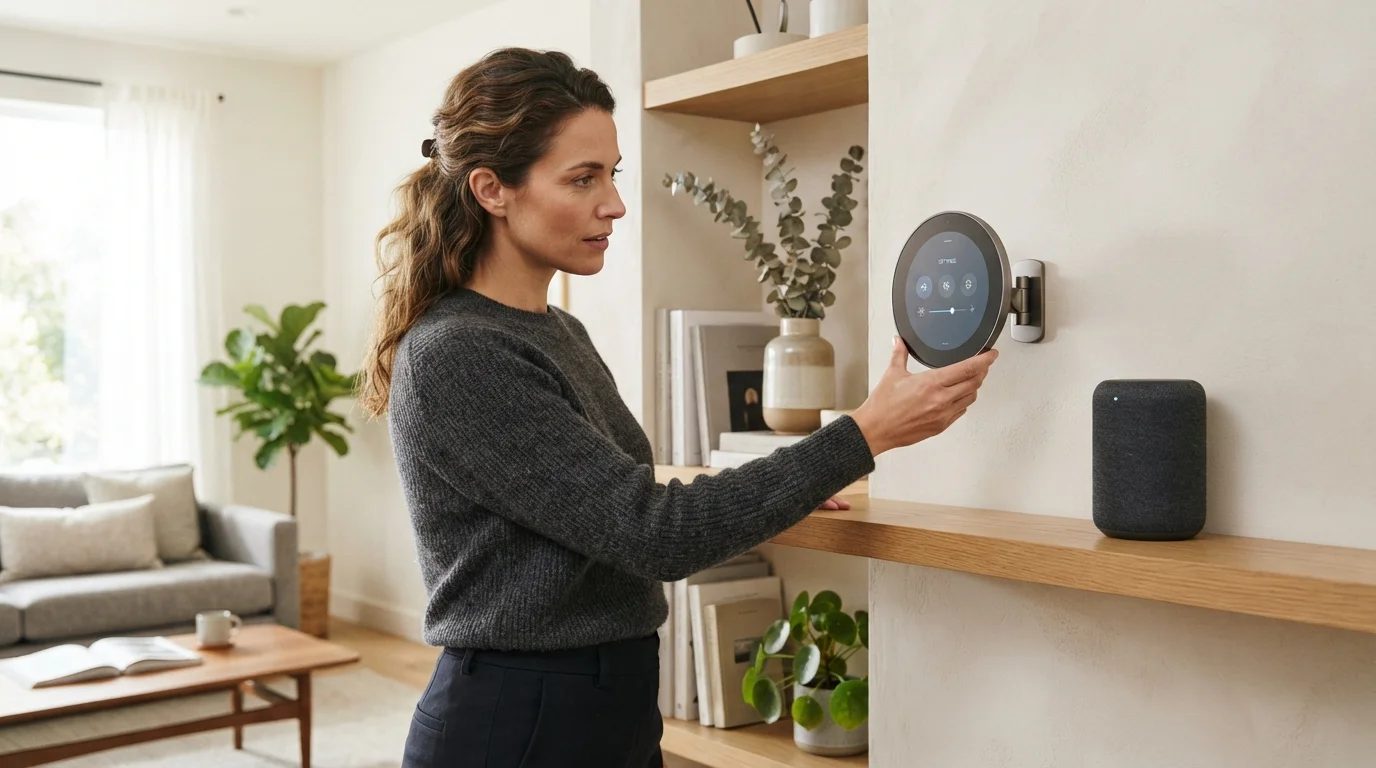
The introduction of an Apple smart display, potentially referred to internally as the “HomePad,” represents a departure from the company’s previous reliance on existing devices like the iPhone or iPad for home control. This new hardware is designed to occupy a permanent, central position in the living environment, serving as both an information hub and a communication terminal.
Unlike standard tablets, this device is engineered to function as a dedicated interface for tvOS, supporting touch-based navigation alongside voice commands. It is expected to mirror the utility of the Apple Watch’s modular design, allowing users to customize their visual interface to suit specific rooms or user profiles. By integrating proximity sensors, the device aims to identify individual household members, automatically adjusting notifications and calendars based on the specific person currently viewing the screen.
Will current smart home devices see hardware updates?
To support the advanced processing requirements of next-generation AI, Apple is planning to upgrade the internal components of its core home products. Both the Apple TV and the HomePod mini are expected to receive significant silicon refreshes to ensure they can handle more complex, on-device Siri requests.
| Device | Expected Hardware Change | Purpose |
| :— | :— | :— |
| Apple TV 4K | New A-series processor | Enhanced AI processing |
| HomePod mini | High-performance chip | Improved Siri responsiveness |
| Smart Display | HomeOS/tvOS integration | Dedicated interface control |
These updates are critical for sustaining the responsiveness of the ecosystem as the company rolls out more data-heavy AI features. By replacing aging internal chips with modern A-series processors, Apple ensures that its hub devices remain capable of managing multiple concurrent smart home streams without performance degradation.
What role will third-party partners play in this ecosystem?
Rather than manufacturing every peripheral in-house, Apple appears to be pursuing strategic partnerships to expand its smart home catalog. Collaborations with companies like LG Electronics and Schneider Electric will allow for a wider array of specialized equipment, such as smart locks, thermostats, and sensors, that carry official compatibility certifications.
This approach helps Apple scale its smart home footprint quickly while avoiding the logistical challenges of developing niche mechanical hardware. These devices will be fully integrated into the existing ecosystem, benefiting from the same privacy and security protocols that define Apple’s own product line. By allowing third-party manufacturers to handle specialized physical components, Apple maintains its focus on software integration and user experience.
How does the new software platform function for users?
The upcoming "homeOS" is designed to provide a unified experience across all linked hardware, focusing on accessibility and speed. Drawing inspiration from existing mobile interfaces, the system utilizes modular widgets that can be rearranged to control cameras, doorbells, or light settings directly from the main dashboard.
This platform relies heavily on low-latency communication between devices. By optimizing the interaction between the hub and peripheral sensors, Apple aims to minimize the lag typically associated with automated home routines. The interface is also intended to be extensible, allowing developers to create dedicated apps that leverage the display for video streaming, security monitoring, or interactive home management tasks.
What are the privacy implications of these new devices?
Privacy remains a cornerstone of the company’s smart home strategy, particularly as more sensors are introduced into the private residence. Apple’s emphasis on on-device processing ensures that sensitive data, such as facial recognition for user identification, is not sent to external servers unless absolutely necessary for specific services.
By avoiding the use of cloud-based facial identification, the company intends to maintain its competitive advantage regarding data sovereignty. Users can expect that their personal preferences, calendar schedules, and home configurations will remain locally encrypted. This focus on local computing is a strategic move to differentiate the brand from competitors whose business models rely on harvesting data from connected household appliances.
In conclusion, Apple’s expanded smart home lineup represents a strategic effort to command the modern living space. Through a combination of proprietary display hardware, refreshed hub devices, and collaborative third-party accessories, the company is positioning itself to provide a more intuitive and secure home management experience.
Source: Engadget