Tesla’s expansion strategy is a major corporate move involving significant new capital. Tesla credit lines are the company’s newly acquired $30 billion in financial facilities intended to accelerate the manufacturing and deployment of its advanced robotics and transport divisions.
Why is Tesla securing $30 billion in new credit lines now?
Tesla is positioning itself for a massive increase in capital expenditure as it moves its experimental concepts into full-scale production. By securing these credit facilities, the company ensures it has the liquidity to build specialized manufacturing infrastructure without disrupting its existing operational cash flow.
According to recent regulatory filings, the company reached agreements with major financial institutions to secure this substantial backing. Citibank has provided a $20 billion three-year delayed-draw term loan. Furthermore, Wells Fargo has committed to an $8 billion five-year revolving credit facility and a secondary $2 billion revolving credit facility with a 364-day term. While the company maintains a strong financial position with over $40 billion in cash and investments, these credit lines act as a strategic buffer. This allows for long-term planning for complex, capital-intensive projects that require immense upfront investment in robotics technology and automated transport systems.
How will Tesla allocate these funds toward the Cybercab?
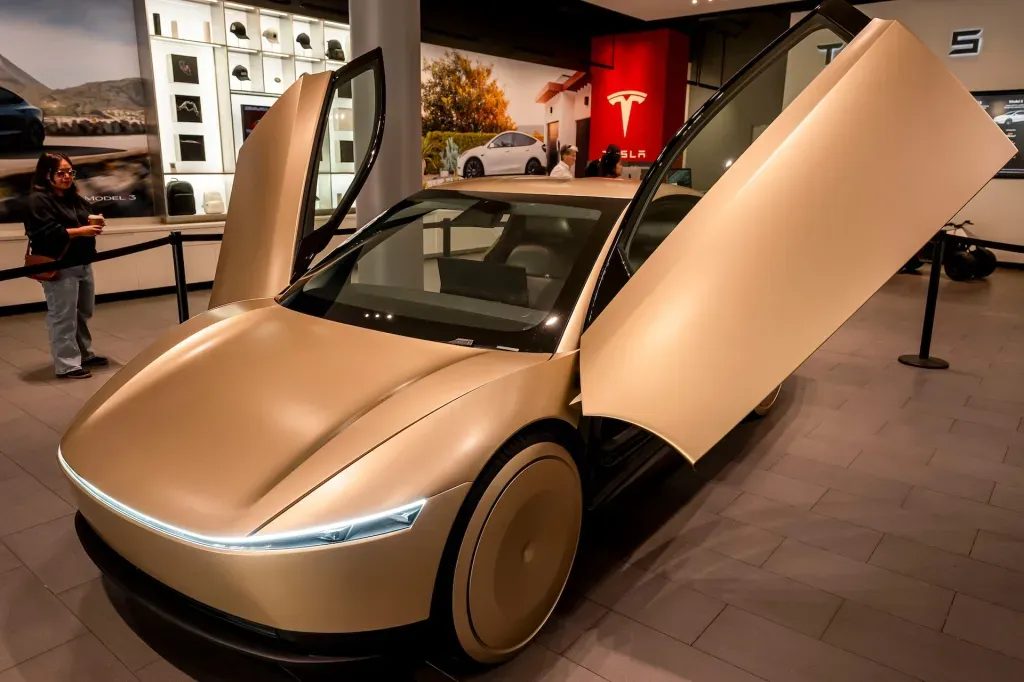
The Cybercab, or robotaxi, requires a completely unique manufacturing approach compared to traditional passenger vehicles. Tesla intends to use these credit facilities to fund the high costs associated with developing specialized assembly lines and testing environments for fully autonomous transportation.
Developing a vehicle specifically for an autonomous fleet necessitates significant investment in specialized hardware and artificial intelligence integration. Unlike traditional car manufacturing, the robotaxi model focuses on high-utilization service platforms. This requires scaling production to meet global demand while maintaining strict safety standards. By tapping into these new credit agreements, the firm can aggressively pursue these production goals. The objective is to transition from concept development to mass-market availability. This capital provides the security needed to handle the unpredictable costs associated with advanced manufacturing scaling, ensuring that the supply chain remains uninterrupted throughout the integration phase of the robotaxi program.
What does this mean for the future of Optimus robots?
Scaling the Optimus humanoid robot requires the construction of dedicated factory lines, which are central to Tesla’s upcoming operational budget. The capital secured through these banks will directly facilitate the infrastructure needed for human-robot collaboration and large-scale industrial deployment.
Building machines capable of performing complex human tasks is a resource-heavy endeavor. It demands specialized facilities for precision engineering and rigorous software testing. By securing these credit lines, Tesla ensures it can sustain the necessary capital expenditures—projected at over $25 billion for the current year—to keep the Optimus project on track. The investment is not merely in hardware but in the systematic expansion of automated workspaces. As the company prepares for a future where labor-intensive tasks may be offloaded to robotics, this financial headroom provides the stability needed to innovate at the speed required for early market adoption and institutional industrial testing.
Are these credit lines intended for immediate spending?
Tesla has clarified in its official regulatory disclosures that it does not currently plan to utilize these credit lines during this calendar year. The facilities serve as a proactive financial hedge rather than an immediate injection of capital for daily operations.
This "delayed-draw" approach is a common corporate strategy to minimize interest costs while ensuring funds are available when construction and manufacturing targets are met. By maintaining a balance of debt and cash reserves, the company optimizes its balance sheet efficiency. The decision to secure these agreements now reflects a forward-looking strategy that anticipates the high capital intensity of upcoming manufacturing projects. This provides stakeholders and investors with confidence that the company will not face liquidity constraints as it scales its next generation of automated transportation solutions. The availability of these resources allows the leadership team to remain focused on technical milestones without the distraction of potential funding gaps.
How does the Tesla Semi fit into this scaling strategy?
The Tesla Semi requires a robust manufacturing footprint to compete in the commercial trucking market, which the new financial facilities will help solidify. Dedicating resources to this heavy-duty platform is essential for the company’s objective of decarbonizing logistics and long-haul transport.
Success in the commercial electric vehicle sector relies on the ability to produce reliable, high-torque transport machinery at scale. The funding from these credit arrangements supports the expansion of dedicated factory lines specifically for the Semi. This includes everything from battery pack production to the final assembly of the chassis. By layering these costs into its broader financial strategy, the organization can scale its freight solutions alongside its consumer-facing robotics and taxi programs. This diversification of product lines minimizes risk and ensures that the manufacturing capacity for commercial units is not sidelined by higher-profile projects. The result is a more resilient, multi-faceted manufacturing machine capable of delivering vehicles that meet the rigorous demands of logistics providers.
What is the total capital expenditure impact?
With projected capital expenditures exceeding $25 billion for the year, the addition of these credit lines helps manage the massive cash outflows associated with innovation. These funds provide the necessary leverage to keep major projects moving in parallel without compromising the company’s core operations.
| Financial Aspect | Strategic Intent |
| :— | :— |
| $30B Credit Lines | Ensure long-term liquidity for manufacturing |
| $25B+ CapEx | Accelerate robotics and transport infrastructure |
| $40B+ Cash/Assets | Maintain existing operations and research |
This table highlights the careful balance between leveraging debt and maintaining significant internal reserves. The move ensures that even if market conditions change, the research and development phases for AI-powered systems continue unabated. By controlling its financing, the company keeps its competitive edge, ensuring it remains the primary driver of the shift toward automation and sustainable transport globally.
In conclusion, the acquisition of these credit lines represents a calculated move to ensure Tesla remains at the forefront of the technological shift. By layering financial security into its roadmap, the company secures the ability to scale its most ambitious projects efficiently.