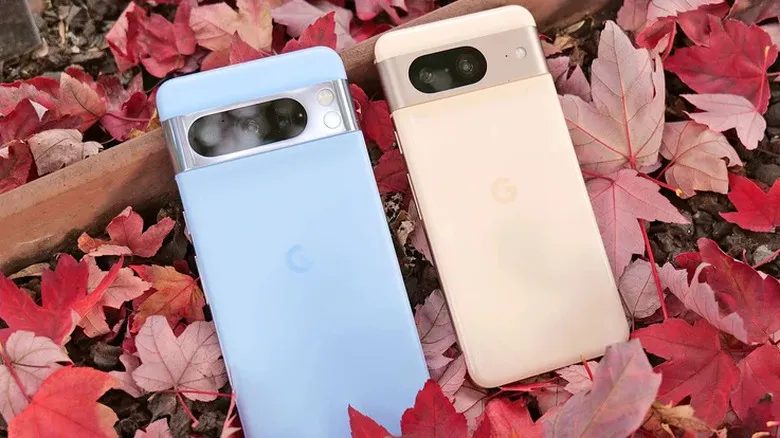
The Google Pixel 8 is a 2023-era mobile smartphone that serves as an entry point into the Android ecosystem. As a legacy device in the current market, the Google Pixel 8 remains a subject of debate for budget-conscious professionals and tech enthusiasts evaluating long-term value against newer silicon.
Is the Google Pixel 8 still relevant for daily productivity?
Yes, the device maintains relevance for users prioritizing a clean software interface and consistent security updates through 2030. While it may not outperform modern flagships, it remains highly capable for standard business applications, communication tools, and media consumption, provided the battery health remains optimal for daily operation.
The hardware foundation of the device includes a high-refresh-rate OLED panel that holds its own against contemporary mid-range offerings. Professionals who value a reliable, bloat-free operating environment often find the Google UI experience superior to heavy manufacturer skins. However, users should be aware that intensive multitasking can sometimes reveal the limitations of the aging processor, particularly when handling complex web assets or enterprise-grade software workflows.
How does the Google Tensor G3 performance impact longevity?
The Tensor G3 processor, while innovative at its launch, now shows signs of strain when compared to the latest mobile chipsets from companies like Qualcomm. As the software demands of mobile applications increase, the hardware may experience occasional latency during high-intensity tasks or resource-heavy rendering scenarios.
Data indicates that as applications evolve, the overhead for background processes often increases. Consequently, users might notice longer application launch times or less fluid UI animations over an extended multi-year cycle. For office environments where quick, responsive communication is essential, this degradation in raw speed could eventually become a productivity bottleneck. While it performs adequately for basic tasks, the silicon is unlikely to satisfy power users or those engaged in mobile content creation who require sustained peak performance over long periods of time.
Does the camera system still compete with modern mobile photography?
The dual-sensor camera array remains one of the device’s strongest assets, leveraging advanced computational photography to deliver high-quality images. The inclusion of software-driven tools like Magic Editor and Best Take provides capabilities that often match or exceed those found in newer mid-range hardware from competing manufacturers.
| Feature | Performance Capability |
| :— | :— |
| Primary Sensor | High fidelity wide-angle capture |
| Ultrawide | Effective for landscapes and interiors |
| AI Processing | Industry-leading object manipulation |
| Video Quality | Reliable for standard business meetings |
Because Google emphasizes software-side enhancements, the imaging suite retains its utility well past the original launch window. For users who prioritize document scanning, professional imagery, or video conferencing over raw gaming benchmarks, the imaging package offers significant residual value. The integration between the optics and the proprietary software ensures that images remain competitive with current-generation hardware, provided the user does not require specialized zoom lenses or extreme low-light performance found in premium "Pro" tiers.
Can you expect consistent software support until 2030?
Google committed to an extensive seven-year lifecycle for the device, which includes both major operating system upgrades and critical security patches. This policy ensures that the device remains compliant with modern security standards and accessible to current application versions throughout its projected life cycle.
- Periodic Android OS upgrades maintain compatibility with the latest APIs.
- Monthly security bulletins protect against emerging digital threats.
- Regular Pixel Drops introduce new features without requiring a hardware upgrade.
- Official support ensures continued access to enterprise management tools.
- Software stability remains a priority, reducing the risk of system-level crashes.
For IT managers, this longevity reduces the total cost of ownership compared to devices with truncated support windows. Ensuring that fleet devices remain patched against vulnerabilities is a core component of enterprise risk management, making the predictable update schedule a distinct advantage for institutional deployments.
Is battery degradation a concern for second-hand units?
Battery longevity is a critical consideration for those acquiring refurbished hardware, as lithium-ion cells naturally lose capacity after several years of chemical cycles. While the factory-rated capacity is decent for average use, real-world performance will heavily depend on the condition of the individual unit purchased through secondary markets.
Charging speeds on the hardware are modest by modern standards, which may be an inconvenience for professionals on the go. If the battery has been heavily cycled, users may find themselves needing a mid-day charge to reach the end of a typical business day. Prospective buyers should prioritize listings that specify battery health percentages or offer warranties on components. In professional settings, failing hardware can disrupt critical workflows, making it essential to evaluate the state of the power management system before committing to a refurbished unit for daily use.
Should business professionals choose this over a newer model?
The decision hinges on whether the lower entry price justifies the trade-offs in raw performance and battery longevity compared to contemporary options. While newer models like the Pixel 9 series offer superior silicon and more RAM, the value proposition of a legacy device is strictly defined by its budget efficiency.
For departments looking to deploy cost-effective, secure, and reliable handsets for basic internal communication, the device is a viable candidate. However, for employees needing top-tier computational power or long-range camera capabilities, investing in a newer generation ensures better future-proofing and potentially higher uptime. Weighing the cost of a refurbished purchase against the total lifetime value of a current-gen device is a necessary step for any strategic IT procurement strategy. If the primary requirements are basic connectivity, secure updates, and reliable imagery, the hardware delivers substantial value compared to the rapid depreciation of newer units.