
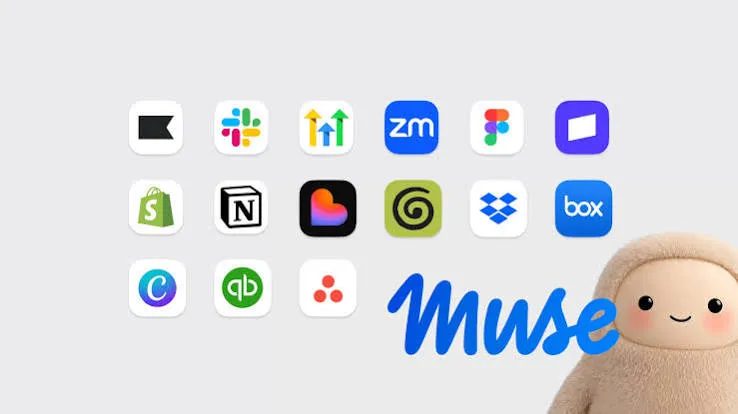
Meta Muse AI is an intelligent software agent designed to streamline administrative tasks by integrating directly with the digital platforms small business owners rely on daily. By utilizing advanced machine learning, Meta Muse AI provides a centralized interface for managing operations, marketing, and customer relations across a diverse software ecosystem.
How does Meta Muse AI integrate with existing workflows?
Meta Muse AI functions by plugging directly into common business platforms to gather contextual data and execute operational tasks. This seamless connectivity allows the system to understand specific brand voices and operational needs without requiring significant manual input or complex configuration steps.
By leveraging APIs from third-party services, the agent accesses information from marketing, finance, and productivity tools to provide a unified overview of business activity. This approach avoids the limitations of standalone chatbots, which often lack the deep integration necessary for effective business management. Instead, the agent monitors workflows in real time, identifying bottlenecks and surfacing actionable insights based on the company’s historical performance. For small business owners, this means shifting from reactive manual management to proactive, automated assistance that evolves alongside their specific professional requirements.
Which software platforms currently support this technology?
The AI agent currently supports a robust list of integrations, including Shopify, Dropbox, Slack, Asana, QuickBooks, Zoom, and many others. This widespread compatibility ensures that businesses can consolidate their tech stack without abandoning the software they already use.
| Integration Category | Supported Platforms |
| :— | :— |
| Sales & Marketing | Shopify, Klaviyo, HighLevel |
| Communication | Slack, Zoom |
| Project Management | Asana, Notion, Figma |
| Financial & Operations | Stripe, QuickBooks, Dropbox |
By unifying these disparate tools, the platform helps eliminate data silos that frequently hinder small business productivity. Instead of toggling between browser tabs, a business owner can leverage the AI’s contextual awareness to perform tasks across platforms. This interoperability is essential for maintaining consistent communication and data accuracy, ensuring that the assistant acts as a comprehensive operational hub rather than a fragmented utility.
How does Meta Muse AI improve customer engagement?
The platform enhances customer engagement by analyzing professional account analytics, Facebook pages, and dedicated ad accounts to optimize marketing outreach. It identifies frequently asked questions and brand-specific communication styles to automate high-quality responses that feel authentic to the business.
Beyond basic automated responses, the system evaluates customer acquisition trends and performance metrics to offer data-driven marketing suggestions. By processing historical interaction data, the agent can recommend specific ad adjustments or customer service improvements tailored to the company’s unique voice. This capability helps smaller teams maximize their limited marketing budgets, ensuring that resources are directed toward strategies that have demonstrated success in previous campaigns. Consequently, business owners spend less time analyzing raw data and more time refining the strategic direction of their brand, while the AI manages the heavy lifting of trend identification and execution.
What is the new Meta Enterprise Platform initiative?
Meta Enterprise Platform is a strategic initiative led by Chirantan Desai, aimed at bringing the company’s full technology stack to corporate customers and developers. This expansion focuses on delivering enterprise-grade tools, including Muse API and Muse Code, to professional organizations looking to scale their AI capabilities.
This initiative marks a significant shift in the company’s business model as it seeks to monetize its substantial investments in artificial intelligence infrastructure. By moving beyond consumer-facing generative AI and addressing the complex requirements of large-scale operations, Meta is positioning itself as a primary provider of B2B intelligence solutions. The platform is designed to provide businesses with the stability, API access, and security necessary for corporate-grade integration. This expansion follows the rapid growth of initial consumer-facing tools, signaling that the company is ready to support high-demand enterprise environments with a suite of professional services and customizable development resources.
Is there a cost to using the AI agent tools?
Meta Muse AI for small business is currently available for free, with usage limits designed to accommodate standard operational needs for most growing companies. Organizations requiring higher capacity can opt for a subscription model to access expanded functionality and increased usage quotas.
This tiered structure is intended to lower the barrier to entry for smaller firms that might be hesitant to invest in unproven technology. By offering a free tier, the developer allows business owners to integrate the agent and test its utility within their specific workflows before committing capital. For organizations that scale quickly or require intensive data processing, the subscription plan provides the necessary head-room to support larger teams and more complex task automation. This approach aligns with broader industry trends where software developers use tiered access to balance market penetration with the costs of hosting intensive, large-scale computational processes for a broad user base.
How does this technology compare to current market rivals?
While the tech industry continues to see intense competition from entities like OpenAI and Google, Meta is focusing on tight integration with existing small business workflows. Its approach prioritizes contextual awareness of a firm’s internal data, rather than relying solely on large, generic language model capabilities.
Most competitors offer robust standalone chatbots, but those tools often struggle to interface effectively with a business’s internal software ecosystem. By contrast, the focus here is on creating a comprehensive digital infrastructure that interacts directly with the tools of the trade. Whether it is adjusting a sales campaign or updating project statuses, the ability to act upon existing business data sets the system apart. As the market for AI tools matures, this emphasis on operational interoperability and specialized domain knowledge will likely become a key differentiator for businesses selecting their long-term digital partners, favoring those that can truly function as an embedded part of the enterprise.
In conclusion, the rollout of these tools signifies a move toward more practical, integrated AI solutions. By meeting small businesses where they operate, the technology offers a tangible way to save time and streamline complex tasks.